
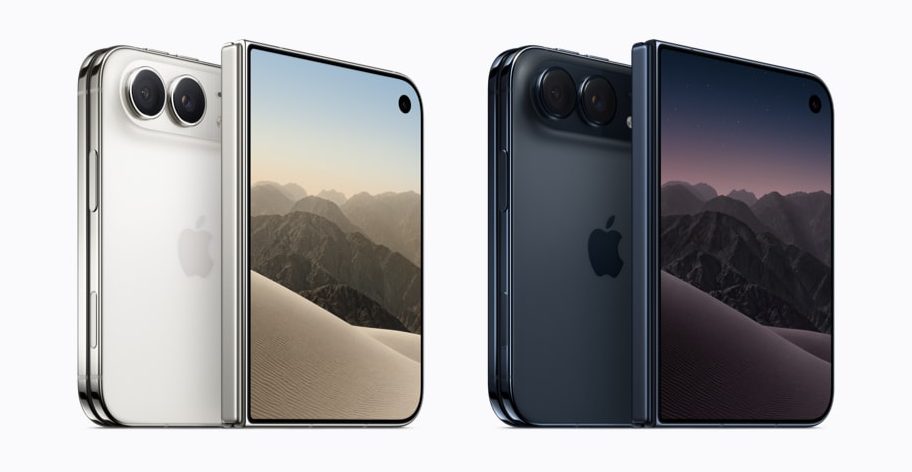
The iPhone Duo Phenomenon
Why Apple's First Fold Has Everyone Talking
For over a decade, "Apple foldable" was one of tech's favorite rumors — filed somewhere between flying cars and the perpetual promise of a cheaper MacBook. Patent filings dating back to 2011 hinted at it, leaks teased it, and Samsung spent years proving the category could actually work. Then, on September 9, 2026, Apple finally made it real: the iPhone Duo.
What Apple Actually Shipped
The iPhone Duo isn't a cautious first attempt — it's a fully realized flagship. Opened up, it houses a 7.6-inch inner display that Apple calls the largest and thinnest ever put in an iPhone, with a nano-texture coating designed to cut glare. Folded, the 5.4-inch outer screen still delivers most of the usable area of a standard iPhone 18 Pro, so the device doesn't feel like a compromise when it's closed. A titanium frame, Ceramic Shield front and back, and an IP68 rating round out a build clearly meant to answer the durability concerns that dogged early foldables from other manufacturers.
Under the hood, the new A20 Pro chip pairs with a dual-battery architecture and a custom vapor chamber for thermal management — the kind of engineering flex that suggests Apple wanted the Duo to feel like a "real" iPhone rather than a novelty. Multitasking is a headline feature too: users can run two apps side by side, open the same app twice, or pair apps together to reopen later, alongside dual-camera tricks like simultaneous front-and-back capture.
Why It's a "Phenomenon" and Not Just a Product Launch
What's made the Duo genuinely interesting isn't the spec sheet — it's the reaction. Early hands-on coverage has been strikingly warm. One widely circulated impression described the transition between phone and tablet mode as feeling almost seamless, with a crease you can see but barely feel. That kind of reception matters because foldables have spent years fighting a reputation for visible, tactile creases and fragile hinges.
At the same time, the launch has stirred a familiar debate: is this genuine innovation, or just Apple catching up to a category Samsung and other Android makers have refined for years? Some commentators have been blunt that the Duo is, at its core, "just" a foldable iPhone — impressive engineering wrapped around an idea the rest of the industry already proved out. That tension between "Apple polish" and "Apple was late" has become its own recurring subplot in nearly every review.
Then there's the internet being the internet. Within days of the announcement, someone managed to get the Duo's distinctive home-screen fold animation running on a Galaxy Z Fold 8 — a small, funny reminder that once Apple sets a visual standard, the rest of the ecosystem starts borrowing from it almost immediately.
The Bigger Picture
Whether or not the Duo is technically "first," it's undeniably a moment. Apple entering the foldable market is being read as a signal that the category has graduated from early-adopter curiosity to mainstream expectation — the kind of validation that tends to reshape an entire product segment. Competitors will be watching pricing, durability claims, and software polish closely over the coming weeks, especially as preorders open on October 16 ahead of an October 23 release.
For now, the iPhone Duo sits at an interesting intersection: technically a follower, culturally treated like a debut. That contradiction — new to Apple, familiar to everyone else — is exactly what's fueling the conversation.